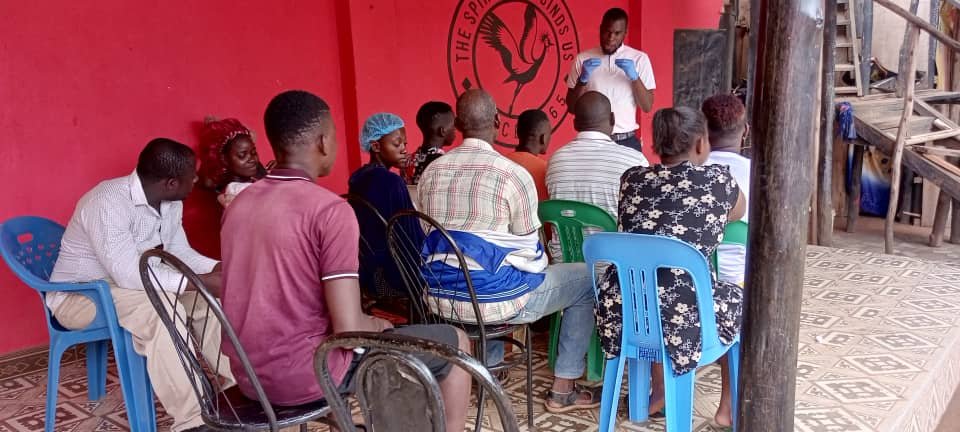
Identify Seeds
Select suitable community members who can reach networks not routinely accessing services.
MARPI PROGRAMMES
Using trusted networks to find people who may be missed by routine testing.
Social Network Strategy (SNS) uses trusted community and social connections to reach people who may have limited contact with conventional HIV testing services, while linking them to testing, prevention and care.

WHAT THE PROGRAMME DOES
MARPI combines community relationships, health-facility systems, differentiated service delivery and routine data so programmes do not stop at mobilisation—they connect people to prevention, treatment, referral and follow-up.


IMPLEMENTATION MODEL
The programme is organised as a connected pathway from understanding community need to delivering services, following up clients and using data for improvement.
Select suitable community members who can reach networks not routinely accessing services.
Explain recruitment, confidentiality, eligibility and referral expectations.
Seeds invite eligible people from their social or sexual networks to access services.
Network members receive appropriate HIV testing options.
HIV-negative clients are offered prevention counselling and relevant services.
Confirmed HIV-positive clients are linked to ART and follow-up.
CORE COMPONENTS
These are the main operational components clients, communities and partners are likely to see during implementation.
SNS uses existing social relationships to reduce barriers to service access.
Recruitment should avoid unnecessary disclosure of another person's health information.
Teams review recruitment, testing, positivity and linkage to understand programme performance.
Recruitment is adapted where there is risk of stigma, violence or other harm.
SNS is connected to PrEP, condoms, HIV self-testing and other prevention choices.
Data and recruiter feedback help refine which networks and approaches are most effective.
CONNECTED PROGRAMMES
MARPI programmes are designed to reinforce each other rather than work as separate silos.
Use Care Connect for services, or contact MARPI to reach a DIC, programme team or referral point.